Black Hole Meaning – Understanding the Basics
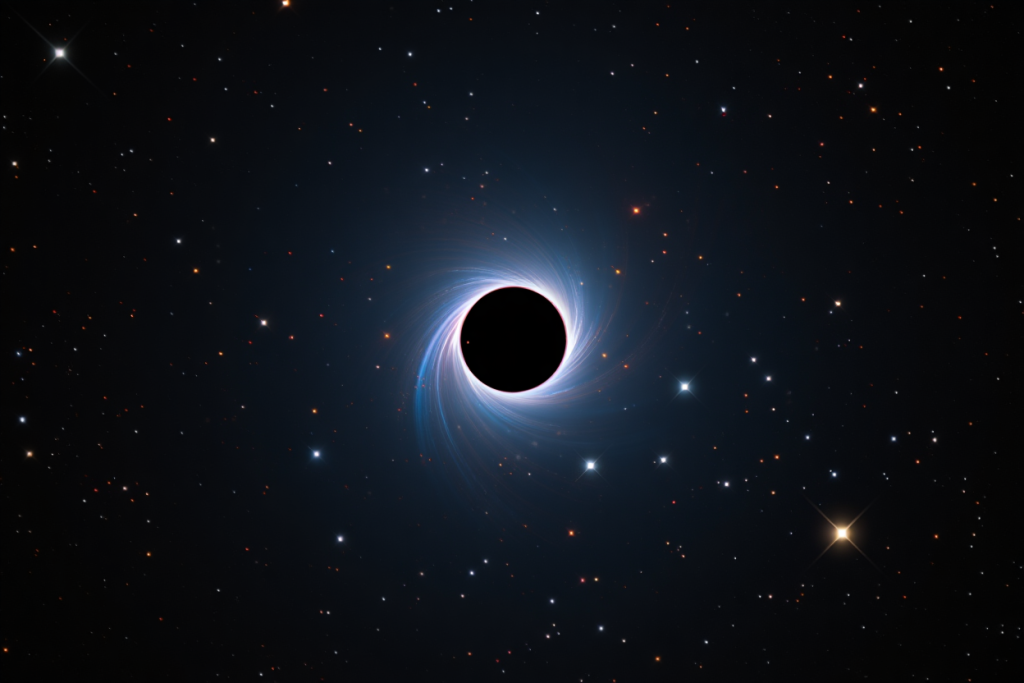
A black hole is one of the most mysterious and fascinating objects in the universe. In simple terms, a black hole is a region in space where gravity is so strong that nothing—not even light—can escape it. This is why black holes are sometimes called “dark holes in space” or simply “dark holes”. When scientists talk about black hole formation, they usually refer to the death of massive stars. After a star exhausts its fuel, it can collapse under its own gravity, creating a black hole.
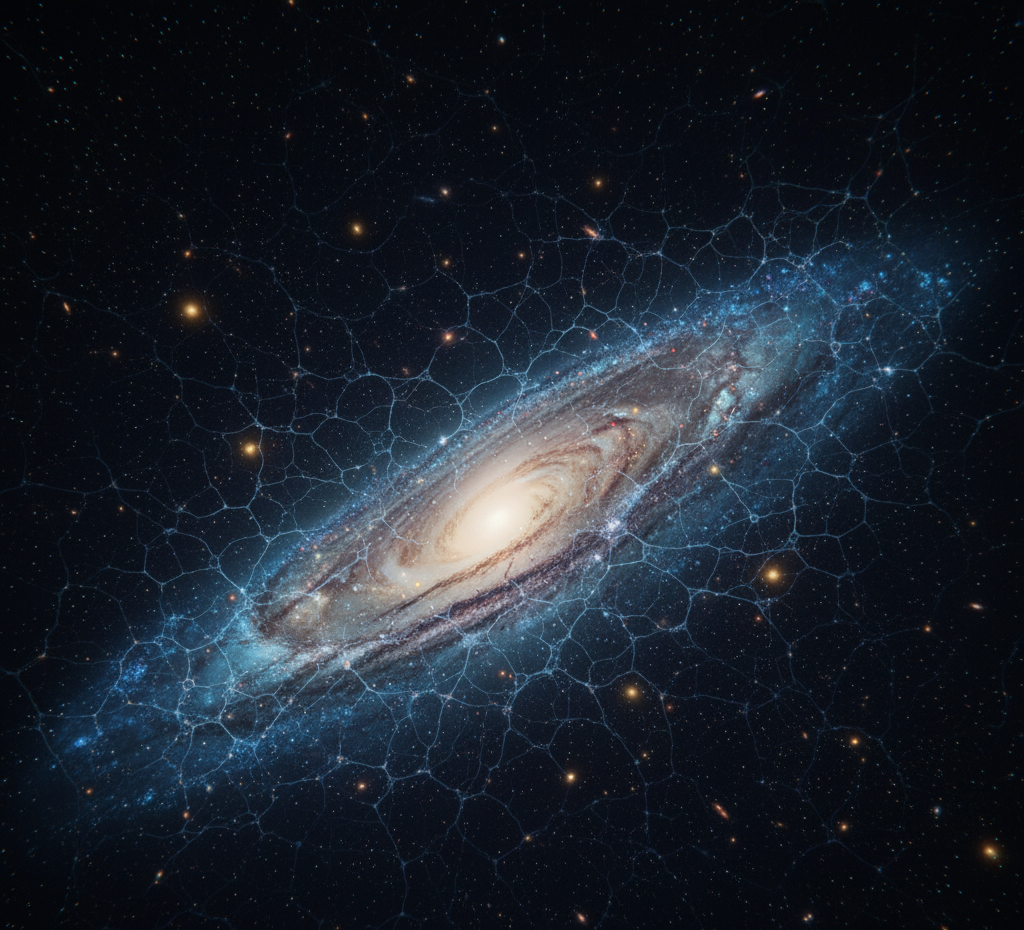
But the black hole meaning goes beyond just being an invisible cosmic trap. Black holes shape galaxies. They also influence how stars evolve around them. There are many black holes in space, from small stellar black holes to gigantic supermassive ones found at the centers of galaxies, including our Milky Way. These powerful objects warp spacetime and help scientists understand the laws of physics at extreme conditions.
Unlike ordinary stars or planets, blackholes cannot be seen directly. Instead, astronomers detect them by observing how they affect nearby matter and light. Studying the black holes gives us clues about the origin of the universe, the behavior of gravity, and even the nature of time itself. The more we learn about black hole formation and activity, the closer we get to solving some of the biggest cosmic mysteries.
How Black Holes in Space Are Formed
The formation of a black hole begins with the life cycle of massive stars. When a star much larger than our Sun runs out of nuclear fuel, it can no longer resist the pull of gravity. The star collapses under its own weight, and if the core is dense enough, it creates a black hole. This process explains why there are countless black holes in space, hidden within galaxies across the universe. These mysterious objects, sometimes called dark holes in space or simply dark holes, form when nature pushes physics to its limits.
Existence of Blackholes
There are several ways blackholes come into existence. The most common are stellar black holes, which form when individual stars die and collapse. Then there are supermassive black holes—millions to billions of times more massive than our Sun—that exist at the centers of galaxies, including our Milky Way. Scientists believe these gigantic black holes in space may have formed from merging smaller black holes or from the direct collapse of massive gas clouds in the early universe.
Astronomers study the black holes by observing the stars and gas clouds around them. As matter spirals into a black hole, it heats up and releases powerful X-rays, which telescopes can detect. Understanding how black holes form teaches us about black hole evolution and galaxy formation. It also reveals clues about the overall structure of the cosmos. Each discovery about the black holes brings us closer to understanding the hidden dynamics of our universe.
Types of Black Holes You Should Know About
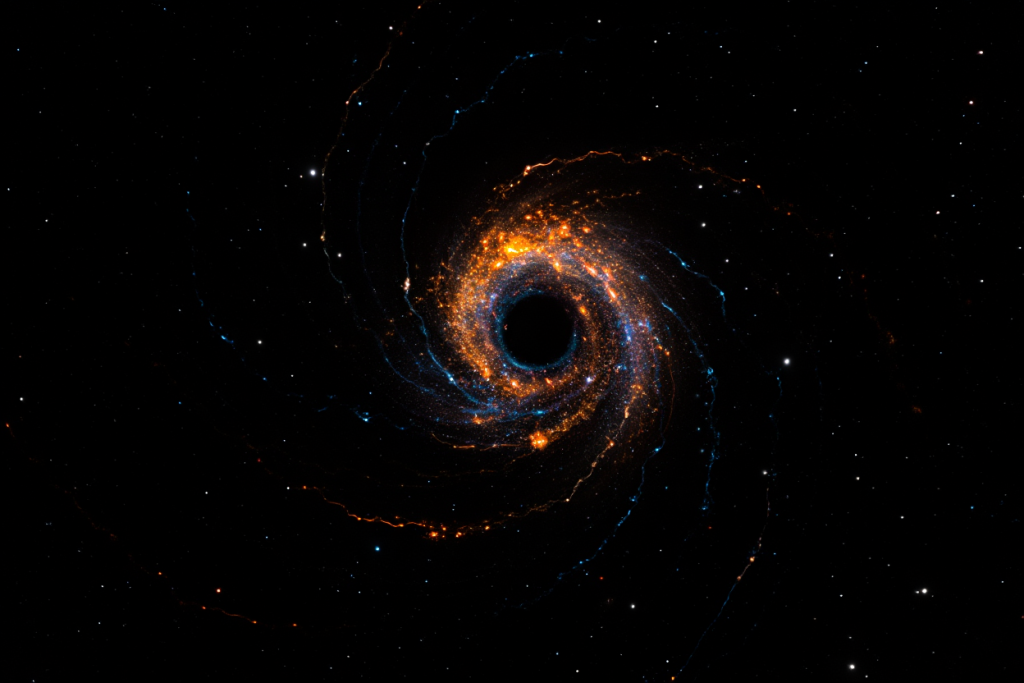
Not all black holes are the same. In fact, scientists have discovered several types of black holes in space, each with different sizes, masses, and formation processes. Understanding these variations helps astronomers uncover the deeper black hole meaning and their role in shaping the universe. From tiny stellar black holes to colossal supermassive black holes, these mysterious dark holes in space continue to challenge everything we know about physics.
Stellar Black Holes
Stellar Black Holes are the most common type. They form when massive stars collapse after running out of fuel, leaving behind an extremely dense core. These are the blackholes most frequently detected by astronomers, often discovered by observing how nearby stars behave around them.
Supermassive Black Holes
Supermassive Black Holes, on the other hand, are millions or even billions of times heavier than our Sun. These gigantic black holes in space sit at the centers of most galaxies, including our Milky Way. Scientists believe they grew by swallowing stars, gas clouds, and even smaller black holes over billions of years.
Intermediate Black Holes
There are also intermediate black holes, which fall between stellar and supermassive in size. Their existence was only recently confirmed, giving researchers new insights about black hole formation. Finally, some theories suggest the existence of primordial black holes, tiny dark holes that may have formed just after the Big Bang.
Studying these different kinds of black holes helps scientists understand how galaxies evolve. It also shows why black holes play a vital role in shaping the cosmos. Each discovery brings us one step closer to solving the mysteries surrounding a black hole and its influence on space-time itself.
What Happens Inside a Black Hole?
One of the biggest mysteries in modern astrophysics is what really happens inside a black hole. These cosmic giants have such an extreme gravitational pull that nothing—not even light—can escape them. This is why scientists often refer to them as dark holes in space or simply dark holes. When matter falls into a black hole, it crosses a boundary called the event horizon. Beyond this point, escape becomes impossible, and our current understanding of physics begins to break down.
Inside black holes, scientists think spacetime is stretched and twisted in unimaginable ways. At the very center lies what physicists call the singularity—a point of infinite density where the known laws of physics no longer apply. Anything that enters a black hole is pulled toward this singularity, but we still don’t fully understand what happens after that. Some theories even suggest that blackholes could connect different regions of the universe through hypothetical “wormholes,” although this remains speculative.
Astronomers study black holes in space by observing how nearby stars, gases, and even light behave around them. When matter spirals into a black hole, it forms a superheated disk that emits powerful X-rays and radio waves, which telescopes on Earth and in orbit can detect. Understanding these signals helps researchers learn more about black hole structure and activity.
Much of what happens inside black holes remains a mystery. But studying them brings us closer to the universe’s deepest secrets. By exploring the nature of the black holes, scientists hope to uncover new insights into gravity, time, and the very fabric of spacetime itself.
The Black Holes and Their Impact on the Universe
Black holes are not just mysterious objects hidden in space. They also play a critical role in shaping the structure and evolution of the universe. Far from being mere cosmic traps, the black holes influence how galaxies form, how stars evolve, and even how matter and energy are distributed across the cosmos. By studying black holes in space, scientists have discovered that these dark holes act as powerful engines driving some of the most energetic phenomena in existence.
Most galaxies, including our Milky Way, have supermassive black holes at their centers. These are millions or even billions of times heavier than our Sun. These gigantic blackholes regulate the growth of galaxies by controlling star formation. When matter spirals into a black hole, it heats up. It then releases intense radiation and jets of particles moving close to the speed of light. These cosmic outbursts affect surrounding gas clouds, shaping how galaxies evolve over billions of years. Without the black holes, the universe as we know it would look very different.
Even collisions between black holes have a profound impact on our understanding of physics. When two massive black holes in space merge, they create ripples in spacetime called gravitational waves. Detected by advanced observatories on Earth, these waves allow scientists to study the nature of gravity itself and provide clues about black hole behavior in extreme conditions.
How Black Holes Shape in Space Galaxies
In essence, a black hole is more than just a “cosmic vacuum.” These dark holes in space shape galaxies, generate powerful energy, and give us a deeper understanding of the fundamental laws of the universe. The more we explore the black holes, the more we unlock secrets about time, space, and the origin of everything around us.
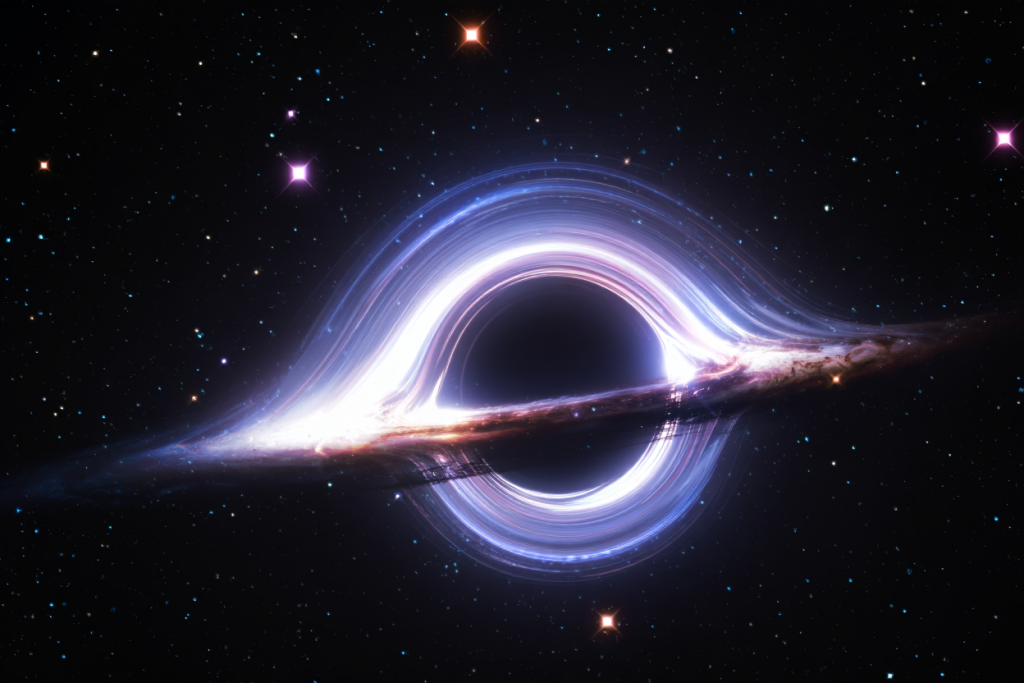
Exploring Black Holes – The Latest Discoveries
In recent years, scientists have made groundbreaking discoveries about black holes that have completely transformed our understanding of the universe. Once thought to be invisible and unreachable, the black holes are now among the most actively studied objects in astronomy. With the help of powerful telescopes and advanced space missions, researchers can finally explore black holes in space and uncover new details about their nature and behavior.
One of the most exciting milestones came in 2019 when astronomers captured the first-ever image of a black hole using the Event Horizon Telescope. This historic achievement revealed the glowing ring of gas surrounding a black hole in the galaxy M87, providing visual proof of what scientists had theorized for decades. Since then, further observations have confirmed that these dark holes in space are more complex than previously imagined, with some showing powerful magnetic fields and high-speed plasma jets.
NASA and the European Space Agency are launching new missions to study black holes and their effects on the universe. Space-based telescopes like the James Webb Space Telescope are providing clearer data about black hole formation, mergers, and energy emissions. Recently, gravitational wave observatories detected ripples in spacetime caused by two massive black holes colliding. This discovery opened a new window into cosmic exploration.
Each new finding about black holes brings scientists closer to answering questions about space, time, and gravity. As technology improves, astronomers are now preparing to map black holes in space across the observable universe, helping us better understand how these mysterious dark holes shape everything around us.
Myths vs. Facts About Black Holes
Black holes have always fascinated people, but they’re also surrounded by countless myths and misconceptions. Some imagine a black hole as a cosmic vacuum cleaner that sucks up everything in its path, while others think of dark holes in space as mysterious portals to another universe. While these ideas are exciting, science paints a more accurate picture about black hole behavior.
One common myth is that black holes roam the universe randomly, swallowing stars, planets, and even entire galaxies. In reality, most black holes in space remain where they formed. Their immense gravity only affects nearby objects. Earth, for example, is far too distant from the black holes at the center of our galaxy to be in any danger. Another misconception is that nothing ever escapes a black hole. However, recent discoveries show that blackholes can emit powerful jets of radiation and energy when matter spirals toward the event horizon.
Some people also confuse dark holes with science-fiction concepts like wormholes. While theories suggest that certain black holes might connect distant parts of the universe, there’s no proven evidence yet. The reality is that studying black holes in space has taught scientists far more about gravity, spacetime, and cosmic evolution than any other celestial phenomenon.
Conclusion – Why Black Holes Are the Key to Understanding the Universe
Black holes are more than just fascinating cosmic curiosities. They are gateways to understanding the fundamental laws of the universe. Studying black holes in space allows scientists to explore extreme gravity and spacetime. It also shows how matter behaves under conditions that cannot be replicated on Earth. Every discovery about black hole formation, activity, and interaction brings us closer to answering the universe’s mysteries.
From a black hole at the center of our galaxy to distant dark holes in space, these cosmic giants shape the evolution of galaxies. They also influence star formation and generate immense energy that impacts their surroundings. Observing black holes and tracking matter near their event horizons reveals the nature of time and gravity. It even gives astronomers clues about the origins of the cosmos.
Moreover, studying blackholes has led to breakthrough discoveries like gravitational waves, which confirm Einstein’s theories and open new avenues for exploring the universe. As technology and telescopes improve, we continue to uncover more about the black holes, moving from theoretical speculation to tangible observation.
Ultimately, a black hole is not merely a dark void. It is a key to unlocking the secrets of space and understanding the evolution of the cosmos. The more we explore black holes in space, the more we realize their central role in shaping the universe and our understanding of reality.
FAQ
A black hole is a region in space where gravity is so strong that nothing, not even light, can escape. Think of it as a cosmic trapdoor—once matter or light enters, it cannot get out. These dark holes in space form when massive stars collapse under their own gravity.
Yes and no. While blackholes themselves don’t emit light, the matter falling into them heats up and glows brightly, creating a visible “accretion disk.” So you can’t see a black hole directly, but you can observe its effects on nearby matter.
Scientists estimate there are millions of black holes in space in our galaxy alone, ranging from small stellar black holes to massive supermassive black holes at the centers of galaxies. The exact number is unknown, but every galaxy likely hosts at least one supermassive black hole.
No, the black holes in our galaxy are far too distant to threaten Earth. While popular movies dramatize this idea, in reality, Earth is safe from being consumed by any nearby dark holes.
Falling into a black hole would stretch and compress your body in a process called “spaghettification” due to extreme gravity. Scientists still debate what happens inside the singularity, but one thing is clear: nothing can escape once it passes the event horizon.
Some theories suggest that certain black holes could act as wormholes, connecting distant parts of the universe. While exciting, this idea remains speculative, and no evidence has yet confirmed it.
Studying black holes in space helps scientists understand gravity, spacetime, and galaxy formation. Observing the black holes also led to discoveries like gravitational waves, confirming Einstein’s theories and opening new ways to explore the universe.
Directly, no. Blackholes don’t emit light, but we can detect them by observing the radiation and matter around them. The Event Horizon Telescope even captured the first-ever image of a black hole, giving humanity a glimpse of these cosmic giants.
For more information, please read “Black holes: Everything you need to know“